A few years ago, I asked what role AI plays in the artistic process. Is it a tool that we use to create art? Is it a creative partner that we collaborate with?
It might have been the right question at the time, but not anymore. As technology has evolved, I’ve come to realize that thinking of AI as a tool or a collaborator is a false dichotomy. Sometimes it’s a tool. Sometimes it’s a collaborator. But, there is a wide spectrum in between.
The right question to ask is this: what role should you hire an AI for?
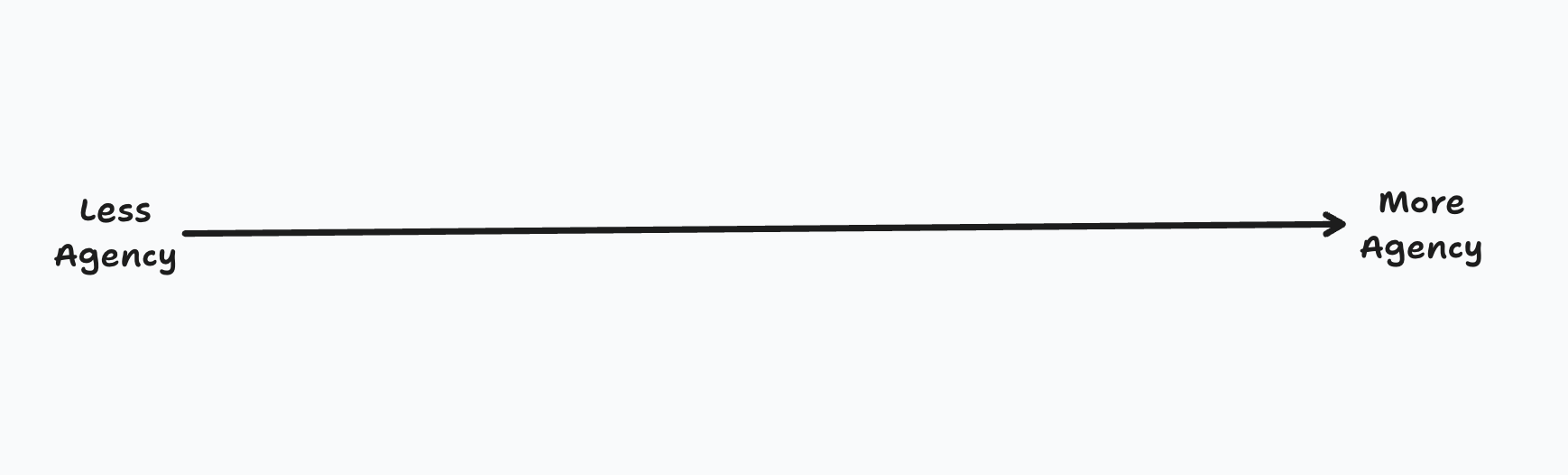
AI can take our direction and execute tasks. Or, it can work on its own. We can give it more agency to do more work for us. And, we can give it more authority to make decisions for us. In short, we can give AI more agency, more authority, or both.
Let’s start with agency. An AI with the least agency is a tool: something that we control entirely and use to create our work. An AI with the most agency is a fabricator: a machine that takes an input of raw material, like a prompt, and produces complex outputs.
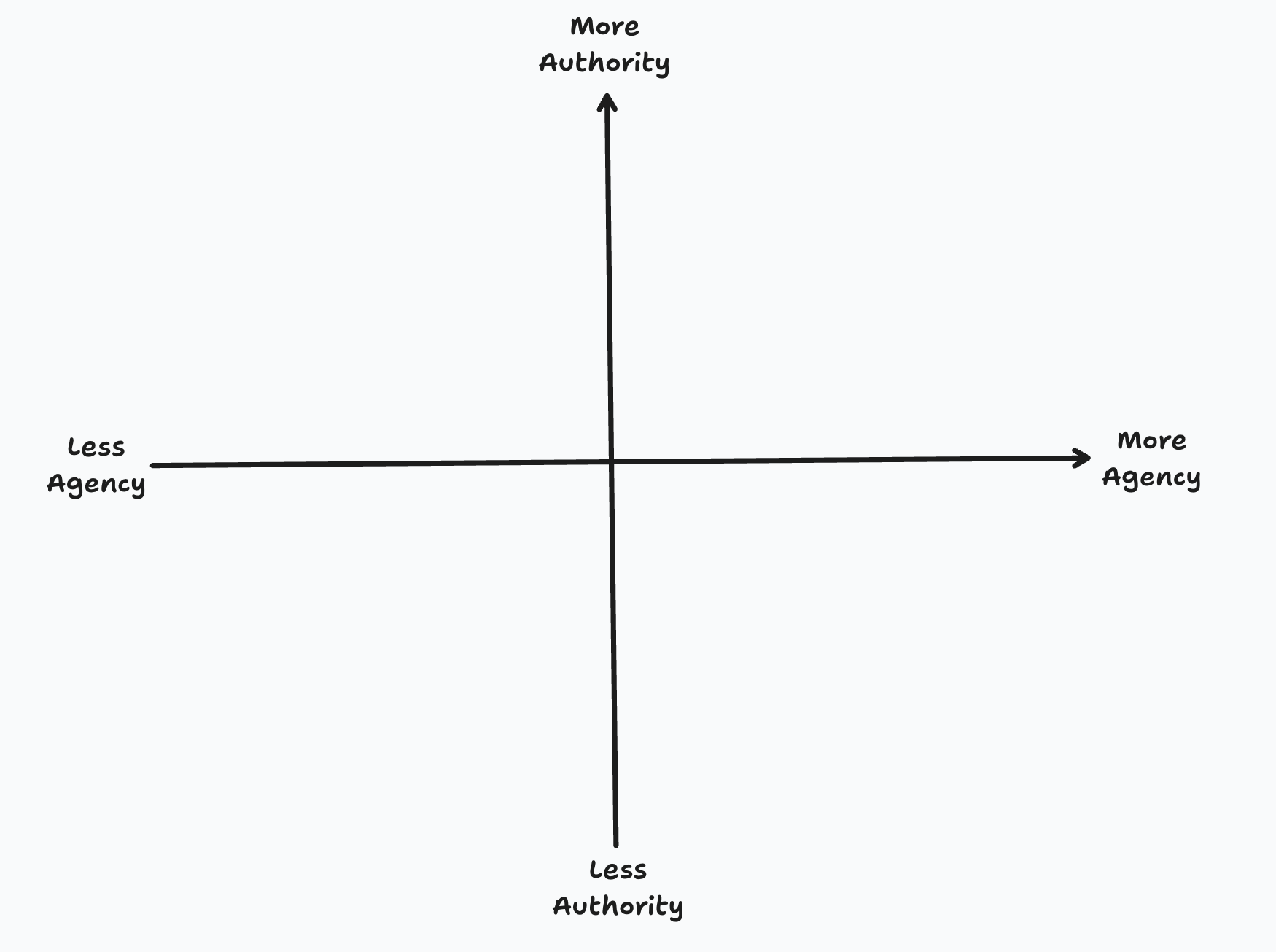
We can then add an additional axis to map the authority in the creative process. At the top of that axis the AI is acting as a leader: giving direction, and never following. And at the bottom is a follower: only taking direction.
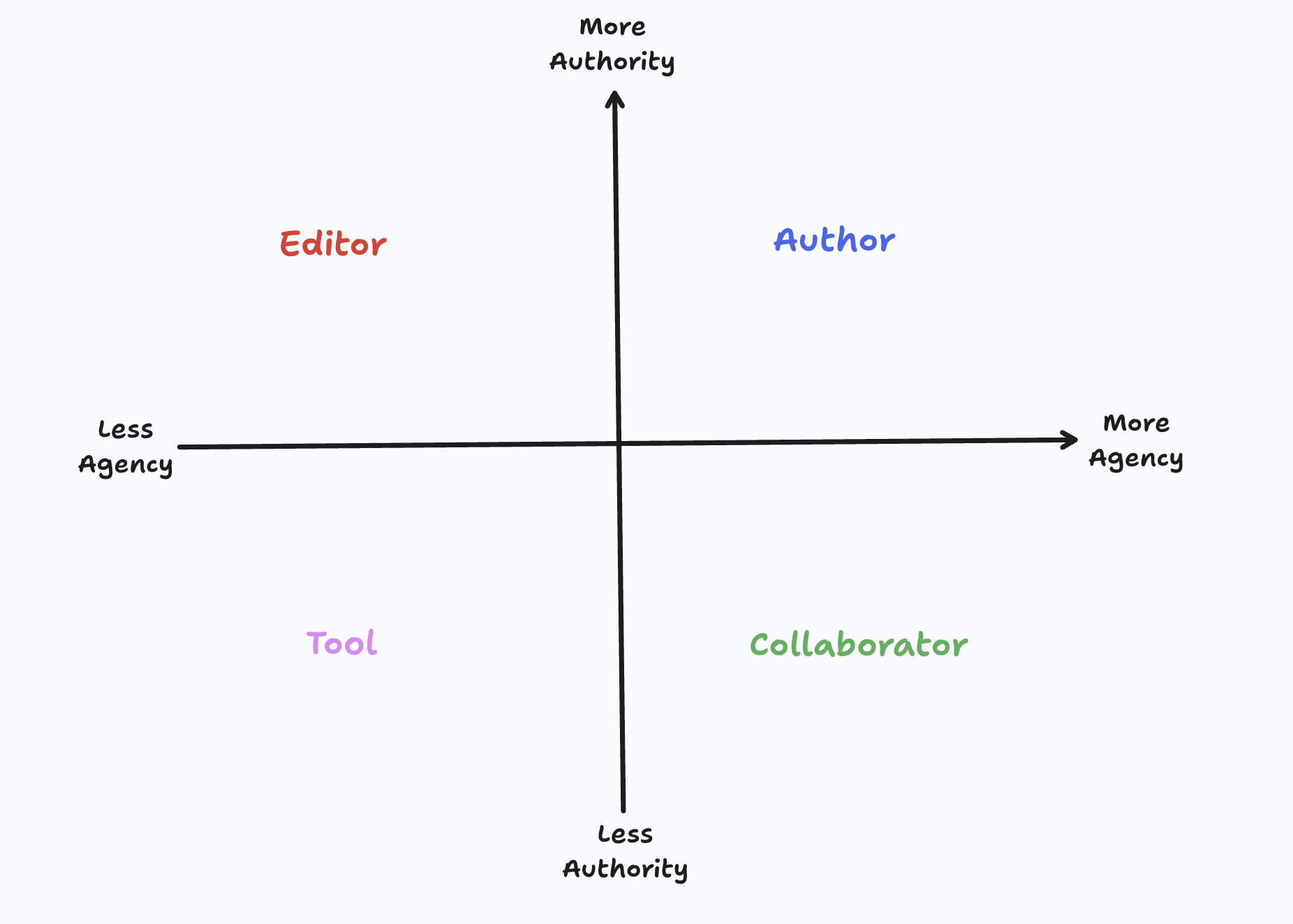
This chart gives me a frame to talk about the different roles where I might employ AI. In the top right quadrant, the AI has more agency to do more work, and more authority to make decisions regarding that work. In this region, the AI is acting as an author, confidently producing outputs with and making its own decisions.
In the top left quadrant, the AI has less autonomy. I’ve given it less agency to perform tasks, but it is empowered to make more decisions. It is an editor: selecting outputs, optimizing workflows, and otherwise being evaluative, critical, and decisive about the work.
In the bottom right quadrant, the AI has more agency to perform tasks, but the power of decision making rests with me, the user. It is a collaborator, working alongside me to produce an output that I could not have made on my own. But, the final decisions are mine.
And finally, in the bottom left quadrant, the AI has less agency to perform tasks, and less authority to make decisions. It is a tool: the right implement to get the job done, wielded by a user who knows exactly what it is they want to make, and how they want to make it.
As AI continues to improve, the roles I use AI for shift towards the top right quadrant: technology as both the do-er and the decider. As I argued in my recent article, AI’s ability to make creative decisions is improving. And our role in creative collaboration is already changing. I work with many creatives who are going through this evolution every day.
New possibilities are being unlocked in each quadrant. AI will generate work quickly and decisively, from end-to-end. It will optimize our processes and workflows, helping us make better decisions faster. It will unlock new collaborative potentials for creators and businesses. And, it will be a powerful tool to make better work happen.
There is room for us, no matter which quadrant our use of AI fits inside.